
How Airbnb and Short-Term Rentals Have Changed — and Where They’re Headed
The party-house era is fading. Families and affluent travelers now fill short-term rentals, platforms ban parties and verify guests, cities collect occupancy tax, and neighbors are noticing well-kept homes on their street.
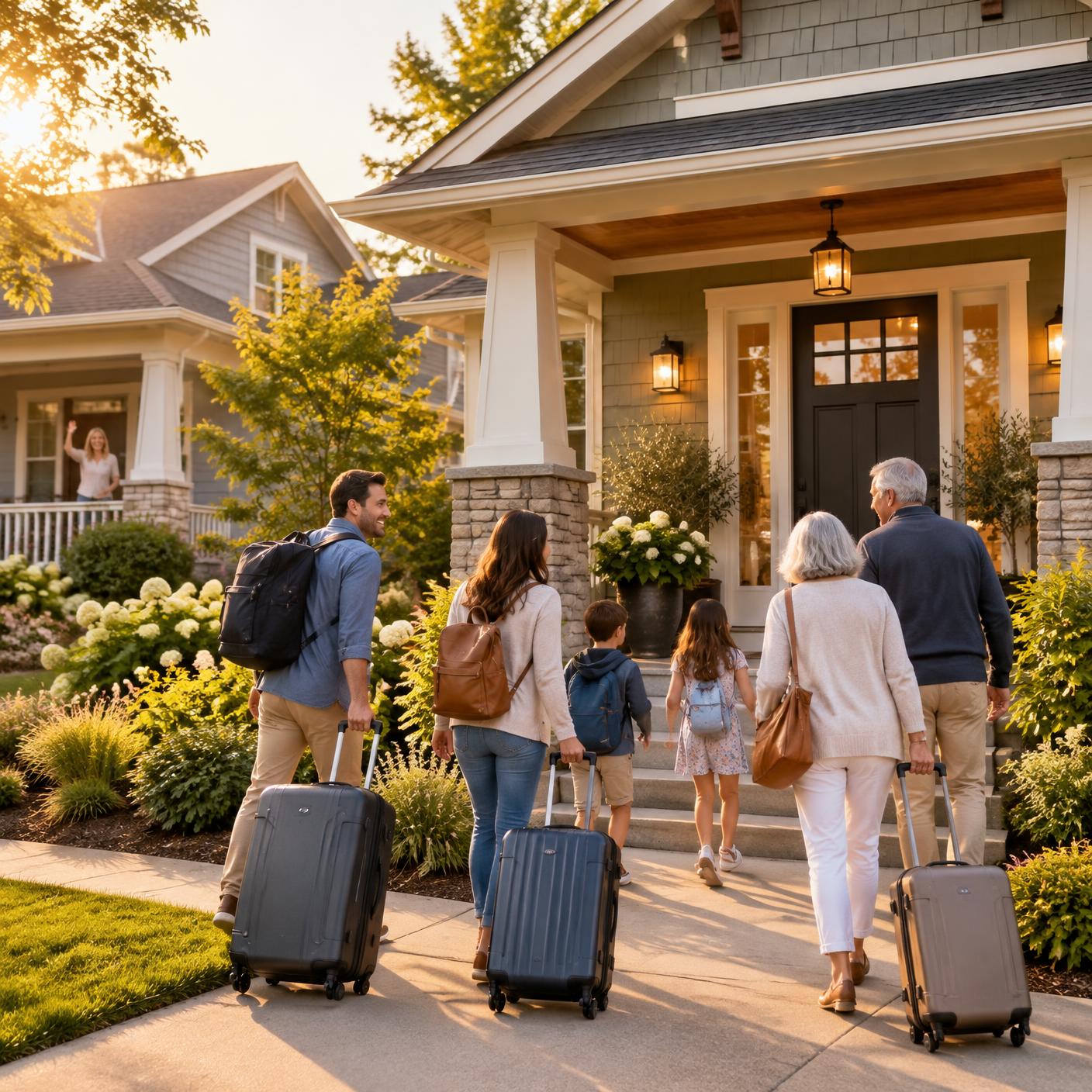
Ten years ago, the phrase “Airbnb next door” made a lot of homeowners nervous. News stories about rowdy weekend parties, overflowing trash cans and cars lining the street shaped how many people pictured short-term rentals (STRs). That picture is now badly out of date. The guests, the rules, the hosts and the cities have all changed — and the result is an industry that looks far more like professional hospitality than a free-for-all.
This article walks through what changed, why the old stigma no longer fits, what the research actually says about housing, and where short-term rentals are headed next.
Who is really booking short-term rentals today
The typical STR guest today is not a group of college students looking for a party venue. It is a family traveling together, grandparents meeting grandchildren for a holiday, couples on a getaway, remote workers on a longer stay, and professionals traveling for work, a wedding or a medical visit. Many of these travelers choose a whole home precisely because they want what a hotel can’t give them: a kitchen, separate bedrooms, a yard, a washer and dryer, and room for everyone under one roof.
These guests are often affluent, booking higher-priced homes for several nights at a time. They read reviews closely, care about cleanliness and quiet, and leave honest feedback for the next traveler. Their priorities — rest, safety and comfort — line up closely with what neighbors want too.
Parties are banned — by the platform and by the host
Airbnb has a global ban on disruptive and unauthorized parties and a prohibition on “party houses,” enforced through its community disturbance policy. According to Airbnb’s own policy toolkit, in 2022 only about 0.039% of reservations worldwide resulted in an allegation of a party. The platform also uses technology to flag higher-risk bookings — for example, last-minute, one-night local reservations — before they are confirmed.
Hosts have every reason to enforce the same rules on their own. Most house rules now say plainly: no parties, no events, no gatherings beyond the listed guest count. Hosts routinely decline inquiries that mention celebrations or large groups. The reasons are simple:
- The headache: a single bad booking can mean emergency calls, cleanup crews and complaints that take weeks to resolve.
- Wear and tear: damaged floors, furniture and landscaping cost money and take a home off the calendar while it’s repaired.
- Neighborhood relations: a disturbance can put a host’s city permit at risk and sour the relationship with the people next door.
- Reviews and rankings: future guests and the platform’s search ranking both reward calm, well-run stays.
Many cities add their own layer of protection, too. Common permit conditions include quiet hours, occupancy limits, parking and trash rules, a “Good Neighbor” guide for guests, and a local emergency contact who must respond quickly if there is ever an issue.
Guests are verified before they arrive
Major platforms like Airbnb screen guests before a stay, including identity verification with a valid government ID, account history and reviews from previous hosts. Hosts can see who is booking, read past host reviews and require verified guests. Compared with the early days of anonymous listings, today’s booking process gives hosts and neighbors far more confidence about who is walking through the door.
The affordable housing claim, examined
A common argument is that STR investors buy up homes and push out affordable housing. It sounds intuitive, but it doesn’t hold up well for the kinds of homes that make strong short-term rentals.
Homes that perform well as STRs tend to be larger, well-located and more expensive — the four-bedroom house near the beach, the cabin by the lake, the desert home with a pool. The households that affordable-housing programs aim to serve generally cannot qualify for a mortgage on these homes, cannot carry the cost of upkeep, taxes and insurance, and in most cases could not pay the standard market rent these same homes would command as long-term rentals. Converting one of these homes back to a long-term lease would not create an affordable unit; it would create another high-end rental.
The research tells a calmer story than the headlines. Early studies claimed short-term rentals pushed home prices up a lot. But when researchers compared similar neighborhoods more carefully, the effect turned out to be small — about 1–4% — and it showed up mainly in a few very busy tourist areas. Studies that looked at whole countries found no clear link between short-term rentals and housing costs. Housing affordability is driven mostly by bigger forces: how much housing gets built, interest rates, construction costs and local zoning. Restricting STRs, in other words, is unlikely to solve a shortage it did not create.
Positive impacts on neighborhood values
The same research found that STRs produce predominantly positive effects for neighborhoods, reflected in slightly higher home values. That matches what many homeowners see on their own street. A permitted short-term rental is often one of the best-maintained homes on the block, for a few reasons:
- City permitting standards: many cities require safety inspections, smoke and carbon-monoxide detectors, fire extinguishers, posted occupancy limits and proper parking and trash plans.
- Competition between hosts: guests compare listings side by side, so hosts keep landscaping trimmed, paint fresh, furniture updated and every room spotless to win bookings.
- Constant reviews: every stay produces feedback, which pushes hosts to fix problems quickly instead of letting them linger.
- Professional management: frequent cleanings, regular maintenance visits and quick repairs mean issues get noticed and handled early.
The literature also notes other positives: additional tourist spending, tax receipts and new business formation. Entire-home rentals were associated with a slight decrease in crime in some studies — an occupied, well-lit, frequently serviced home is not a vacant one.
Neighbors’ perceptions are changing
As the industry has matured, many neighbors now know their local hosts by name and have a direct number to call. A policy study of Orange County cities found that fewer than ten percent of STRs record a complaint in a given year. When rules are clear and hosts are responsive, most neighbors simply see a nicely kept house with polite visitors coming and going — often the same families returning year after year.
That everyday experience is gradually replacing the old headlines. Cities that once debated outright bans are increasingly choosing permit systems, registration portals and complaint hotlines instead — rules that keep the benefits while holding operators accountable.
TOT: how short-term rentals help fund cities
Transient Occupancy Tax (TOT) — also called a lodging, hotel or bed tax — is a city-level tax on stays shorter than 30 days. Hotels, motels and bed and breakfasts pay it, and permitted short-term rentals do too. On many platforms the tax is collected from the guest at booking and sent directly to the city. Airbnb reports collecting and remitting more than $7 billion in taxes to governments around the world.
Those dollars help fund local services such as roads, parks, public safety and tourism programs. And the benefit goes beyond the tax itself. Guests buy groceries, eat at local restaurants, visit attractions and shop at small businesses. Hosts hire local cleaners, handymen, landscapers, contractors and pool services. In many towns, short-term rentals bring visitors to neighborhoods hotels never reach.
The future of short-term rentals
Looking ahead, the short-term rental industry is moving toward more professionalism, more accountability and more partnership with cities:
- Clearer, fairer local rules: permit and registration systems that let responsible hosts operate while giving cities tools to act on bad actors.
- Better technology: smarter booking screening, noise-monitoring devices that measure decibel levels without recording audio, and simple tax-collection systems.
- Higher standards: guests expect hotel-level cleanliness and design, which keeps raising the bar for every home on the market.
- Professional operators: more homes run by experienced management teams with local crews and clear accountability.
- Broader ownership: new models, like fractional ownership, let more investors share in professionally managed homes without buying and running a whole property alone.
Where airEquity fits
airEquity was built around this more mature version of the industry. Homes are selected with local rules in mind, prepared to a high standard, and run by professional management teams that enforce no-party house rules, screen bookings and stay responsive to neighbors. We believe the best short-term rentals are good businesses and good neighbors at the same time — and that the two go hand in hand.
The bottom line
The party-house stereotype belongs to an earlier chapter of short-term rentals. Today’s guests are largely families and established travelers, platforms ban parties and verify identities, hosts protect their homes and neighbors, and cities collect meaningful tax revenue. The housing debate deserves real data, and that data points to much bigger causes than STRs. As neighbors keep having better experiences, perceptions will likely keep improving too.
Sources include Airbnb’s STR policy toolkit, a literature survey on the effects of short-term rentals on local housing prices and rents, and a policy study on long-term solutions to short-term rentals in Orange County, California. This article is for educational purposes only, is not an offer to sell securities, and reflects airEquity’s perspective. All real estate investing carries risk, and returns are not guaranteed.
Ready to invest?
Become an airEquity shareholder.
Apply to invest, verify your accredited status, and review the properties currently open for fractional ownership.
Apply to invest